


-
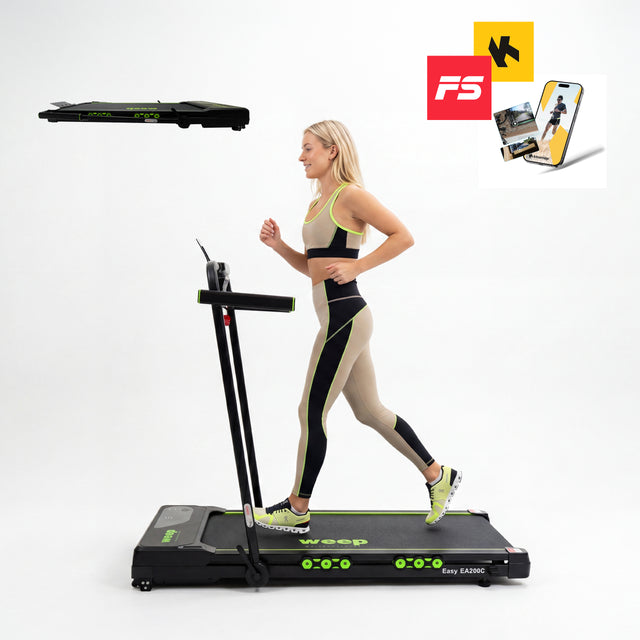
 Up to 32% off
Weep
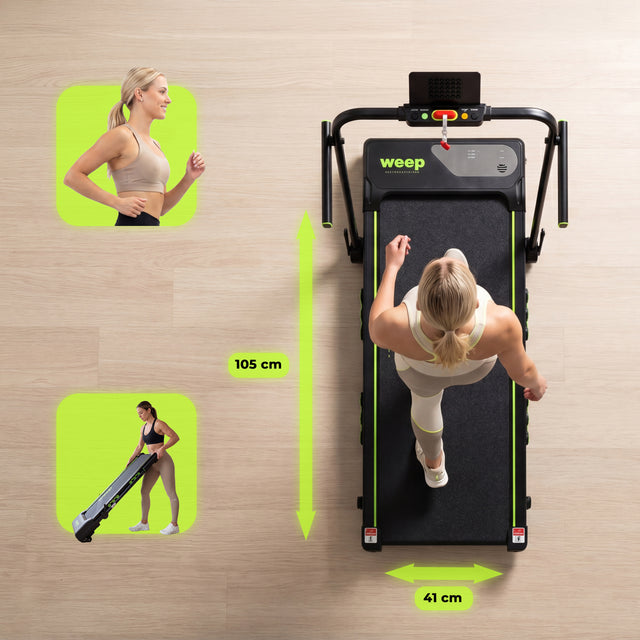
Weep Easy Electric Folding Treadmill Auto-Incline Adjustment Cushioning 12km/h
€292,95€427,95( / )Unavailable -
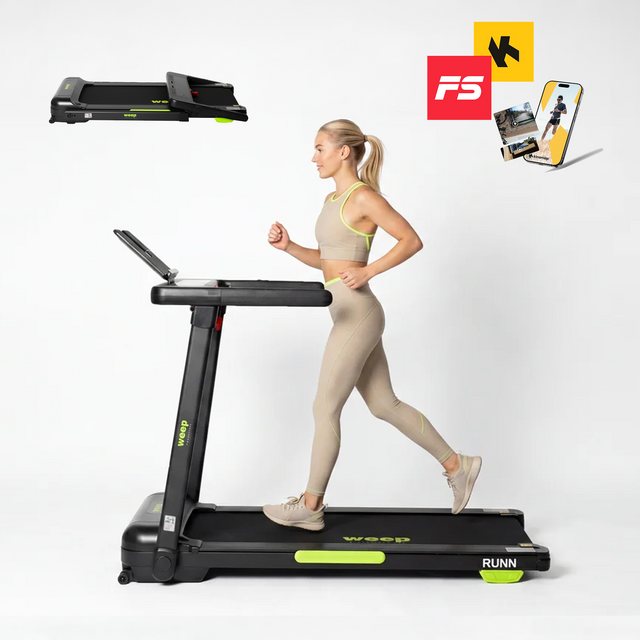
 Up to 21% off
Weep
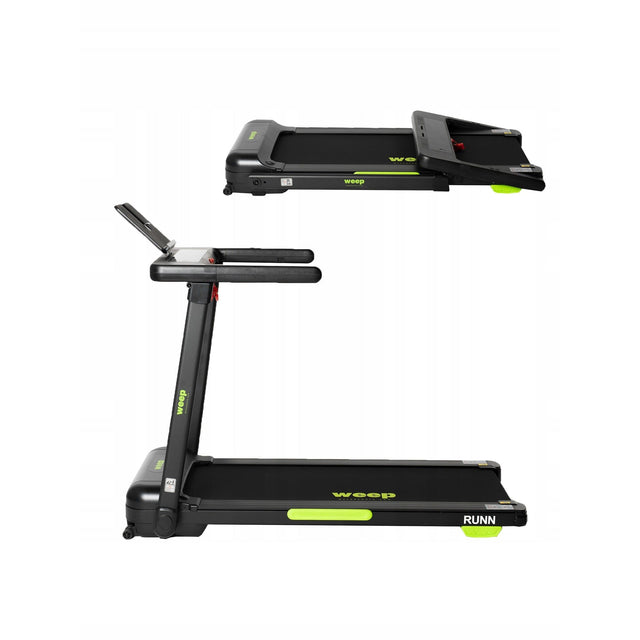
Weep Runn Electric Treadmill Foldable with Auto-Adjust Incline. 15 km/h 120 kg APP
€422,95€534,95( / )Unavailable -
 Up to 24% off
Weep
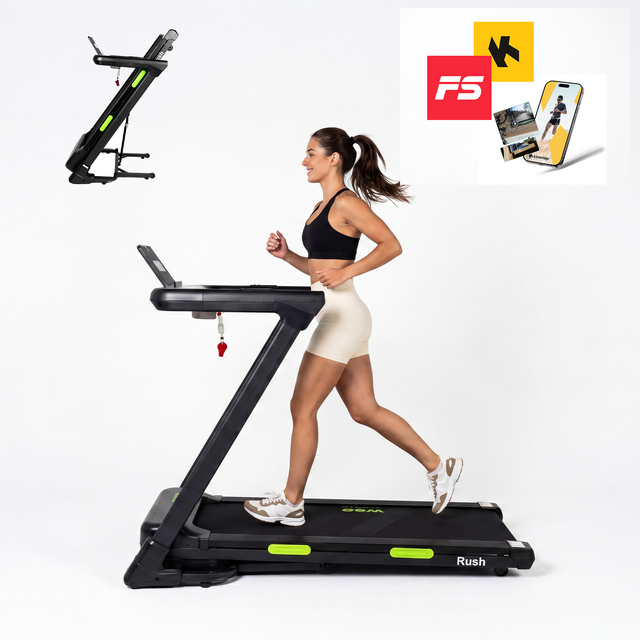
Weep Rush Electric Home Treadmill Auto Incline 15km/h Cushioning App
€427,95€561,95( / )Unavailable
An incline treadmill with automatic adjustment lets you change the angle with a single button on the console or the remote — mid-walk, without stepping off the belt. That's the difference between a feature you use every day and a bolt under the frame you turn once every six months. In this category you'll find WEEP models with incline ranges from 15% to 25%.
Why walking uphill does more than walking on the flat
At the same speed, raising the deck changes the nature of the workout. Your heart works harder, and your glutes, calves and hamstrings join in — muscle groups that flat walking barely engages. At 5 km/h and an 8% incline, oxygen consumption nearly doubles compared with walking on the flat, so 20 minutes uphill equals roughly 40 minutes of an ordinary walk.
Crucially, the speed stays low. There's no flight phase and no hard landing, so your knees take less strain than when running — often the deciding argument for people getting back into exercise after a break.
WEEP electric incline treadmills — which model to choose
- WEEP Easy EA300C — incline up to 15% across 15 levels, 2-in-1 design: up to 6 km/h it works as an under-desk walking pad, up to 12 km/h as a classic treadmill. 41 × 105 cm belt, 1.75 HP motor, up to 100 kg. It weighs 30 kg and is just 14.5 cm tall when folded, so it slides under a bed. The best choice for a small flat and for combining movement with work.
- WEEP Rush — incline up to 20% and the most powerful motor of the three (2.0 HP). 45 × 120 cm belt, up to 15 km/h, up to 110 kg, four-point cushioning. Built for anyone who plans to run regularly as well as walk uphill.
- WEEP Runn RN500 — the widest range in our line-up: 25 levels up to a 25% incline, i.e. climbs like the steep sections of a hiking trail. 120 kg maximum user weight, six training programmes, colour LCD display, folds flat to 20 cm.
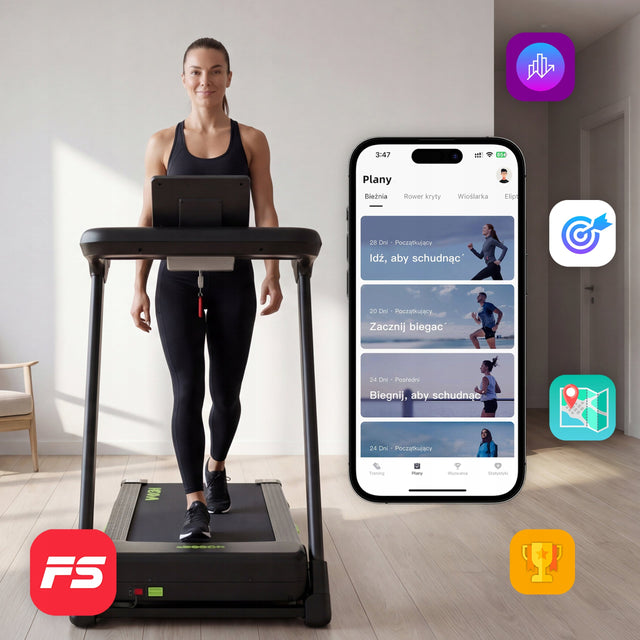
All three models connect via Bluetooth to the FitShow and Kinomap apps, so you can follow a route on your phone screen.
What to look for when buying
Motor power and maximum user weight. At a steep angle the motor works under constant load, so one that's too weak struggles on longer climbs. Choose a model with spare load capacity relative to your own weight rather than one that's cutting it fine.
Belt width and cushioning. 41 cm is enough for walking and jogging; for dynamic running you'll appreciate 45 cm. Cushioning is the most underrated spec — it decides whether your knees start aching after three weeks of daily training.
Folded dimensions and machine weight. Check not only where the treadmill will stand, but also how you'll get it there. At 30 kg you can carry the Easy on your own; the Rush (48 kg) and Runn (47 kg) need a second pair of hands to get upstairs without a lift.
Incline range — how much do you really need?
A typical home treadmill tops out at a 12–15% incline. To start with, 6–8% is plenty — the pace at which holding a conversation gets hard. The headroom matters later: once 8% stops being a challenge after a few weeks, the Rush still has 12 percentage points in reserve and the Runn 17. That's why, when choosing, it pays to look not at top speed but at the incline range.
All WEEP treadmills are covered by the manufacturer's warranty, and we keep spare parts in stock at our warehouse in Poland.