

Just a few years ago, the commute to work was a given. Today, for millions of people, the day begins just a dozen steps from the bed. Literally.
Remote work has brought many benefits. Time savings, greater flexibility, and the ability to work from anywhere. However, there's one thing that is rarely talked about – the number of steps that have disappeared from our lives.

From car to desk. From desk to couch.
Before the era of remote work, movement occurred naturally.
A walk to the bus stop, crossing the parking lot, climbing stairs to the office, going out for lunch, or a short walk after work meant that many people took several thousand steps without conscious effort.
In the home office model, this movement often disappears completely.
The day starts with a walk to the kitchen. Then several hours at the computer. Followed by lunch, more online meetings, and evening relaxation on the couch.
It doesn't sound alarming until we look at the numbers.
How many steps do we actually take?
According to data published by activity tracker manufacturers and analyses covering millions of smartphone and smartwatch users, the average person currently takes about 4,000 to 7,000 steps per day.
The problem is that people working remotely often fall below this average.
Studies conducted after the widespread adoption of remote work showed that many people experienced a decrease in daily activity of up to 2,000–3,000 steps per day compared to periods of office work.
In practice, this means that some remote workers end the day with as few as 2,000–4,000 steps.
That's less than a walk through a large shopping mall.

Is 10,000 steps a day mandatory?
The number 10,000 steps has long been a symbol of an active lifestyle. In reality, modern research shows that health benefits appear much earlier.
Regularly taking about 6,000–8,000 steps a day can already significantly impact cardiovascular health, fitness, and overall well-being.
So the biggest problem isn't the lack of 10,000 steps.
The problem is a situation where we practically don't move for most of the day.
The body doesn't like inactivity
The human body was designed for movement.
Even a few hours spent in one position affects circulation, muscle stiffness, and a decrease in concentration.
That's why many people working remotely notice by the end of the day:
- tension in the neck and shoulders,
- lower back pain,
- fatigue despite lack of physical activity,
- difficulty concentrating,
- a drop in energy.
Paradoxically, intense training is not always necessary.
Often, more movement spread evenly throughout the day is enough.

How to increase your step count without an extra hour of training?
The simplest solutions often turn out to be the most effective.
It's worth starting with simple habits:
- taking phone calls while standing,
- short walks between online meetings,
- going out for coffee or tea instead of keeping everything at your desk,
- a walk after lunch,
- 10–15 minutes of walking in the morning or evening.
Such small changes can increase your daily step count by several thousand without having to reorganize your entire day.
It's not about sport. It's about movement.
Many people give up activity because they associate it solely with training.
Meanwhile, the body doesn't distinguish whether you're taking steps while running, walking, or moving around your apartment. Movement matters. Every extra walk, every time you step away from your desk, and every few minutes of activity benefits your health. Especially when you spend most of your day in front of a screen.
Summary
The average Pole working remotely may take several thousand fewer steps than someone working in an office. However, this doesn't mean that daily hour-long workouts are necessary. Often, the biggest difference is made by small decisions taken each day. A few minutes of movement in the morning. A short walk after lunch. Stepping away from the desk between meetings. It is precisely from such small activities that a healthy lifestyle is built.
More stories
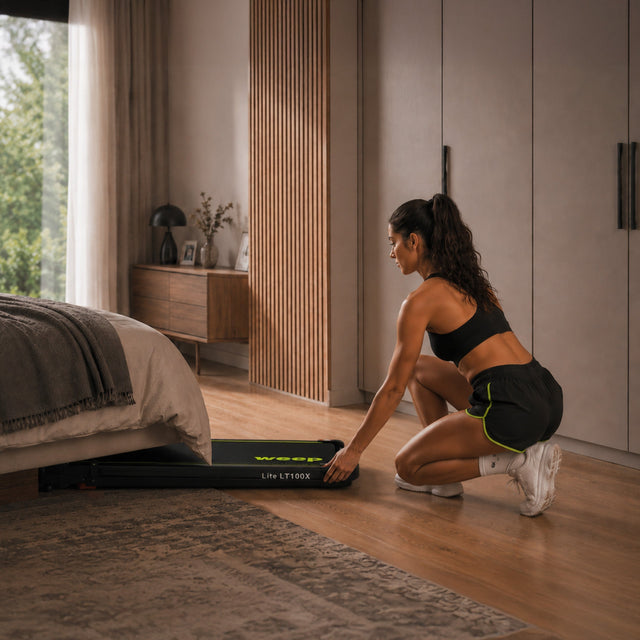
Your salon, your rules. Weep Lite: The 2-in-1 revolution that makes no compromises
